
We spend too much time validating whether numbers are real before we can trust the insights.
The current state of linked oncology data
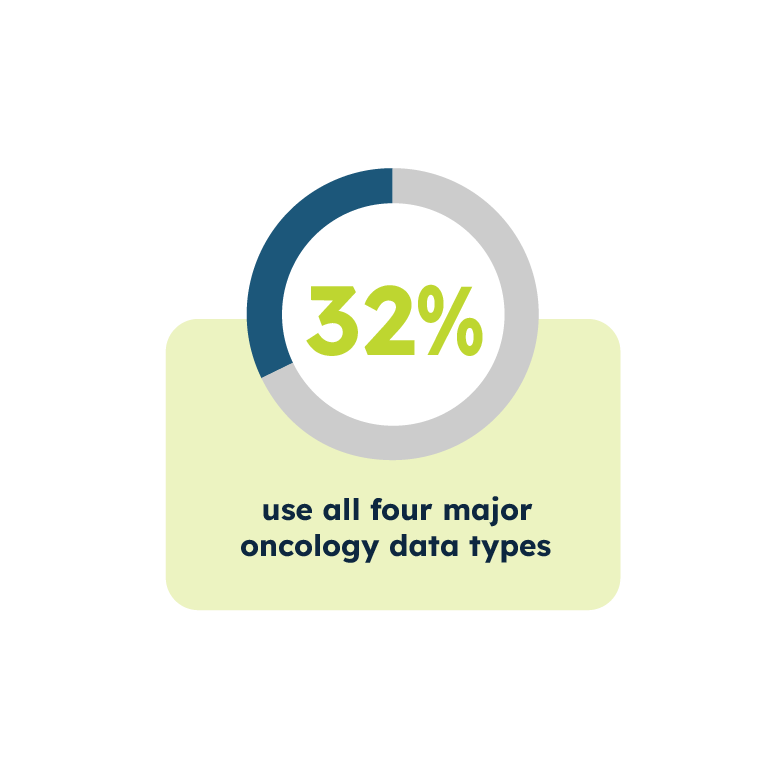
Most teams work with multiple oncology data sources, but fewer report linking all major data types together in a consistent way. This baseline helps explain why approaches to building patient‑level views vary across research, evidence and commercial use cases. This gap also highlights the difference between access to data and the ability to assemble a complete, longitudinal view of the patient journey.
Linked oncology data is moving toward standard practice
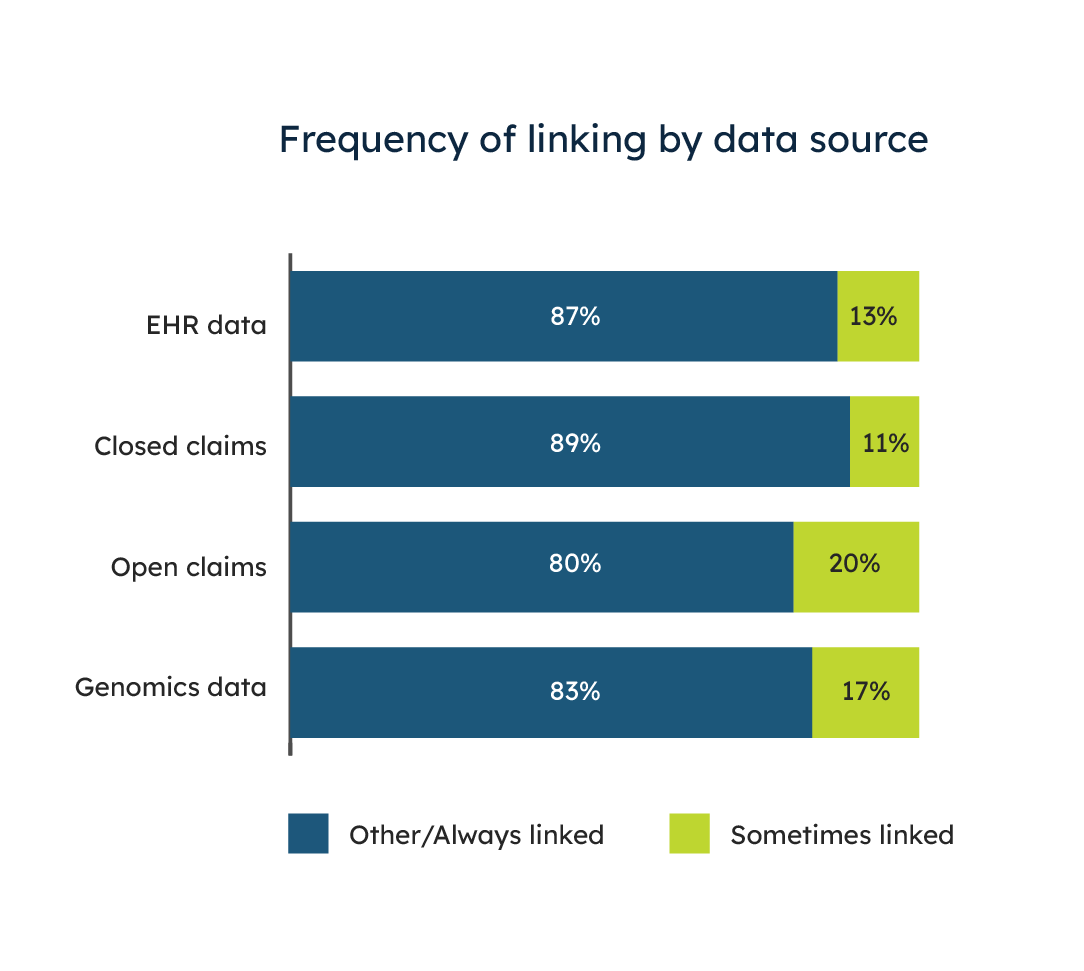
Most respondents expect linked oncology real-world data (RWD) to become standard practice within the next two years, while only a small share say it functions that way today. This gap underscores an industry in transition, where expectations for linked data are outpacing current operating reality.
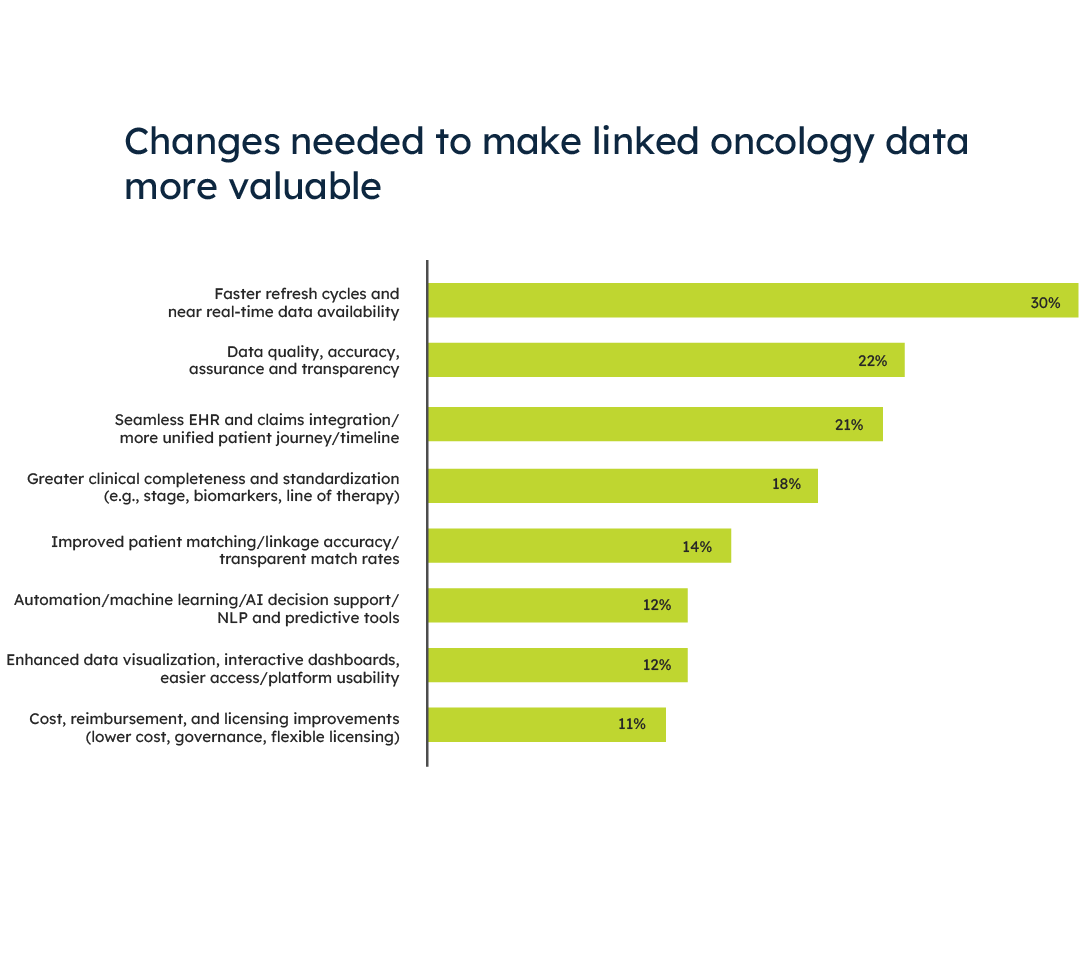
What teams say would make linked data more valuable
As expectations for linked oncology data rise, respondents point to several areas where current approaches still fall short, most notably patient matching, completeness across data sources and transparency into how data is linked and maintained. These needs reflect a broader desire to reduce time spent reconciling datasets and increase confidence in applying linked data across research, evidence and commercial workflows.